

Bedroom Curtains
Bedroom Curtains for Privacy and Light Filtering
Shop bedroom curtains in cotton, linen and thicker blend weaves — light-filtering panels that soften morning light and protect privacy. Calm neutrals like cream, beige and grey sit alongside deeper navy, green and orange, with floral, plaid and embroidered designs included. Lengths run from 63 inches for short windows up to select styles in 108 and 118 inches.
Shop by Room or Length
Living Room Kitchen 84/86 Inch Curtains 94/96 Inch Curtains
Shop by Material or Style
Linen Cotton Lace Floral Farmhouse Embroidery Striped Plaid Sheer
Not sure about measurements? View our Curtain Size Guide.
-
Blue Striped Farmhouse Curtain
Regular price From $35.54Regular price$50.78Sale price From $35.54Sale -
Off White Farmhouse Curtain
Regular price From $35.54Regular price$50.78Sale price From $35.54Sale -
White Striped Farmhouse Curtain
Regular price From $35.54Regular price$50.78Sale price From $35.54Sale -
Green Striped Farmhouse Curtain
Regular price From $35.54Regular price$50.78Sale price From $35.54Sale -
Light Blue Striped Curtain
Regular price From $35.54Regular price$50.78Sale price From $35.54Sale -
Sage Green Striped Curtain
Regular price From $35.54Regular price$50.78Sale price From $35.54Sale -
Beige Striped Farmhouse Curtain
Regular price From $35.54Regular price$50.78Sale price From $35.54Sale -
Light Green Striped Curtain
Regular price From $35.54Regular price$50.78Sale price From $35.54Sale -
Curtain With Green Striped
Regular price From $42.21Regular price$60.30Sale price From $42.21Sale -
Curtain With Orange Striped
Regular price From $42.21Regular price$60.30Sale price From $42.21Sale -
Curtain With Black Striped
Regular price From $42.21Regular price$60.30Sale price From $42.21Sale -
Curtain With Blue Striped
Regular price From $42.21Regular price$60.30Sale price From $42.21Sale -
Grey Striped Farmhouse Curtain
Regular price From $35.54Regular price$50.78Sale price From $35.54Sale -
White Striped Farmhouse Curtain
Regular price From $35.54Regular price$50.78Sale price From $35.54Sale -
White Embroidered Striped Curtain
Regular price From $35.54Regular price$50.78Sale price From $35.54Sale -
Light Green Striped Curtain
Regular price From $35.54Regular price$50.78Sale price From $35.54Sale -
Beige Plaid Farmhouse Curtain
Regular price From $35.54Regular price$50.78Sale price From $35.54Sale -
Light Grey Plaid Curtain
Regular price From $35.54Regular price$50.78Sale price From $35.54Sale -
Off White Plaid Curtain
Regular price From $35.54Regular price$50.78Sale price From $35.54Sale -
White Embroidered Plaid Curtain
Regular price From $35.54Regular price$50.78Sale price From $35.54Sale -
Green Jacquard Farmhouse Curtain
Regular price From $36.65Regular price$52.36Sale price From $36.65Sale -
Olive Green Farmhouse Curtain
Regular price From $35.54Regular price$50.78Sale price From $35.54Sale -
Yellow Paisley Bohemian Curtain
Regular price From $36.65Regular price$52.36Sale price From $36.65Sale -
Beige Jacquard Farmhouse Curtain
Regular price From $36.65Regular price$52.36Sale price From $36.65Sale -
Blue Striped Embroidered Curtain
Regular price From $42.21Regular price$60.30Sale price From $42.21Sale -
Grey Striped Embroidered Curtain
Regular price From $42.21Regular price$60.30Sale price From $42.21Sale -
Green Striped Farmhouse Curtain
Regular price From $42.21Regular price$60.30Sale price From $42.21Sale -
Beige Vertical Striped Curtain
Regular price From $41.10Regular price$58.72Sale price From $41.10Sale -
Grey Farmhouse Plaid Curtain
Regular price From $35.54Regular price$50.78Sale price From $35.54Sale -
Beige Farmhouse Plaid Curtain
Regular price From $35.54Regular price$50.78Sale price From $35.54Sale -
Light Blue Plaid Curtain
Regular price From $35.54Regular price$50.78Sale price From $35.54Sale -
Sage Green Plaid Curtain
Regular price From $35.54Regular price$50.78Sale price From $35.54Sale


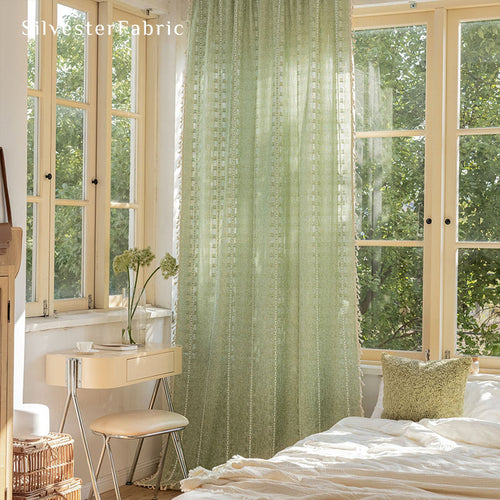
Bedroom Curtains for Restful Sleep
The bedroom asks more from curtains than any other room: soften the morning, guard the night, and keep the mood calm.
Gentle Mornings
Our panels are all unlined, so light is filtered, never erased. Thicker weaves and deeper tones take the sting out of early sun.
Privacy After Dark
Light-filtering fabric blurs the view in, day and night. For street-facing windows, add a simple blind behind the curtain.
Choosing Bedroom Curtains for Your Room
Light in the Morning
Every panel here is unlined and light-filtering: it softens sun rather than blocking it. Thicker fabrics and deeper colors pass less light. For east-facing rooms or shift-work sleep, add a blind behind the curtain.
Fabric and Feel
Cotton and cotton-linen blends are soft, breathable and easy to wash. The thicker blends chosen for this collection hang with more weight and calm more light. Pick what feels right next to your bedding.
Color and Mood
Cream, beige and soft grey keep a bedroom quiet and open. Sage green and soft blue add a calm, natural note. Navy, deep green and deep orange ground the room and pass the least daylight.
The Right Length
Use 63 inch panels for short windows, 84/86 inch for standard floor length, and 94/96 inch for taller ceilings or a higher rod; select designs reach 108 and 118 inches. Measure rod to floor, then choose the nearest length.
FAQ
Which bedroom curtains help with bright morning light?
Start with fabric and color, not coating. The thickest weaves in this collection, in a deeper tone like navy, deep green or deep orange, pass the least morning light while keeping the room from feeling sealed. Hang panels wide enough to cover the frame edges so sun does not leak around the sides. If you wake with the sun no matter what — east-facing rooms, shift-work sleep — add a simple blind behind the curtain; the curtain keeps the softness, the blind does the heavy work.
Are unlined light-filtering curtains enough for a bedroom?
For most sleepers, yes. Unlined light-filtering panels cut glare, soften early sun and give real privacy from shapes and movement outside. What they will not do is turn midday into midnight — if you need a truly dark room for daytime sleeping, pair the curtain with a blind. For many sleepers the filtered light is the point: the room wakes up gently instead of staying sealed.
How do I stop people seeing into my bedroom at night?
Light-filtering fabric already blurs shapes and movement from outside after dark — far more than a sheer would. For windows close to the street or a neighbor's window, layer for certainty: add a blind behind the curtain, or overlap two panels on a wider rod so there are no gaps. Close everything before the lamps go on, since interior light makes any fabric more transparent from outside.
Which curtains fit a short or small bedroom window best?
Short windows, and windows over radiators or furniture, suit our 63 inch panels — they end cleanly at the sill without pooling fabric where it does not belong. Keep the panel generously wide so coverage stays full, and pick a lighter tone to keep a small wall feeling open. If the window is short but the room is tall, a floor-length 84/86 inch panel works too and makes the wall feel higher.
What is the difference between bedroom and living room curtains?
Function first. Bedrooms ask for privacy and softer mornings, so this collection leans on thicker weaves and deeper, calmer tones. Living rooms ask for daylight and daytime privacy, so that collection carries more airy fabrics, including sheers. Plenty of panels sit in both — a mid-weight cotton in a neutral tone works anywhere. If a window faces the street, treat it like a bedroom window no matter which room it is in.
Do darker curtain colors let in less light than pale ones?
Yes, in our range they do. With unlined curtains there is no coating doing the work, so color and weave decide how much sun gets through: navy, deep green and deep orange pass noticeably less daylight than cream or white in the same fabric. That is why the thicker bedroom styles come in deeper tones. If you love a dark look but want brighter mornings, hang the dark panel and open it earlier — the fabric brings mood, not a permanent dimmer.
Should I pick solid, textured or embroidered bedroom curtains?
Solid panels are the most versatile and the easiest to match with bedding you already own. Textured weaves add depth without committing to a pattern. Light embroidery gives a softer decorative note and works well when the rest of the room is plain. This collection holds all three, so decide by what the room already has: patterned bedding calls for a quiet curtain, while plain bedding can carry the detail.
What suits a small bedroom versus a large primary bedroom?
In a small bedroom, keep things light and simple: cream, beige or soft grey in a clean weave, hung full length so the wall reads taller. A large primary bedroom can carry more — deeper tones like navy or deep green, fuller fabric and stronger texture without crowding the space. In both cases the panel should still reach the floor; it is proportion, not size, that makes the room feel finished.
Collections
-

84/86 Inch Curtains
84/86 Inch Curtains in Floral, Lace, Linen and More Shop 84/86 inch...
-

94/96 Inch Curtains
94/96 Inch Curtains for Tall Windows Shop 94/96 inch curtains for taller...
-

Cafe Curtains
Cafe Curtains for Kitchen Windows and Half-Window Privacy Shop cafe curtains for...
-

Living Room Curtains
Living Room Curtains in Linen, Cotton and Sheer Shop living room curtains...
-

Bedroom Curtains
Bedroom Curtains for Privacy and Light Filtering Shop bedroom curtains in cotton,...
-

Lace Curtains
Lace Curtains for Kitchen, Bedroom and Cottage Windows Find lace curtains for...
-

Farmhouse Curtains
Modern Farmhouse Curtains for Living Room, Bedroom, and Kitchen Shop modern farmhouse...
-

Striped Curtains
Striped Linen and Cotton Curtains for Living Room and Bedroom Shop striped...
-

Plaid Curtains
Plaid Curtains for Cozy Farmhouse and Cottage Rooms Shop plaid curtain panels...
-

Floral Curtains
Vintage Floral Curtains for Living Room and Bedroom Printed and embroidered floral...
-

Linen Curtains
Linen Curtain Panels for Bedroom and Living Room Windows Find linen and...
-

Cotton Curtains
Cotton Curtains for Living Room, Bedroom and Kitchen Shop cotton curtain panels...


