

Embroidered Tablecloths
Embroidered Tablecloths in French and Floral Styles
Shop embroidered tablecloths with French-inspired details, floral patterns, and decorative edges for dining rooms, weddings, holidays, and special events. Choose from round, square, and rectangle sizes to create a softer, more finished table setting.
Shop by Material, Shape, and Color
Linen Cotton Rectangle Round Square White Green
Shop by Pattern or Style
Floral Striped Plaid Farmhouse French
Not sure about measurements? View our Tablecloth Size Guide.
-
Beige French Floral Tablecloth
Regular price From $45.54Regular price$65.06Sale price From $45.54Sale -
Beige Floral Cotton Tablecloth
Regular price From $45.54Regular price$65.06Sale price From $45.54Sale -
French Floral Linen Tablecloth
Regular price From $44.43Regular price$63.48Sale price From $44.43Sale -
Spring Floral Linen Tablecloth
Regular price From $51.10Regular price$73.00Sale price From $51.10Sale -
White Floral Embroidered Tablecloth
Regular price From $31.10Regular price$44.43Sale price From $31.10Sale -
Blue French Floral Tablecloth
Regular price From $54.43Regular price$77.76Sale price From $54.43Sale -
French White Floral Tablecloth
Regular price From $36.65Regular price$52.36Sale price From $36.65Sale -
White Spring Floral Tablecloth
Regular price From $54.43Regular price$77.76Sale price From $54.43Sale -
French Red Floral Tablecloth
Regular price From $49.98Regular price$71.40Sale price From $49.98Sale -
Red Floral Cotton Tablecloth
Regular price From $46.65Regular price$66.65Sale price From $46.65Sale -
French Floral White Tablecloth
Regular price From $41.10Regular price$58.72Sale price From $41.10Sale -
White French Cotton Tablecloth
Regular price From $61.10Regular price$87.29Sale price From $61.10Sale -
Green Wreath Christmas Tablecloth
Regular price From $33.32Regular price$47.60Sale price From $33.32Sale -
White Floral French Tablecloth
Regular price From $49.99Regular price$71.42Sale price From $49.99Sale -
Beige Panda French Tablecloth
Regular price From $45.54Regular price$65.06Sale price From $45.54Sale -
Beige Owl French Tablecloth
Regular price From $45.54Regular price$65.06Sale price From $45.54Sale -
Sage Green Rectangle Tablecloth
Regular price From $35.54Regular price$50.78Sale price From $35.54Sale -
Grey Striped Rectangle Tablecloth
Regular price From $35.54Regular price$50.78Sale price From $35.54Sale -
Grey Plaid Rectangle Tablecloth
Regular price From $29.98Regular price$42.83Sale price From $29.98Sale -
Sage Green Rectangle Tablecloth
Regular price From $35.54Regular price$50.78Sale price From $35.54Sale -
Off White Floral Tablecloth
Regular price From $39.98Regular price$57.12Sale price From $39.98Sale -
Off White Rectangle Tablecloth
Regular price From $44.43Regular price$63.48Sale price From $44.43Sale -
Beige Farmhouse Geometric Tablecloth
Regular price From $37.76Regular price$53.95Sale price From $37.76Sale -
Beige Embroidered Linen Tablecloth
Regular price From $37.76Regular price$53.95Sale price From $37.76Sale -
Leaf Embroidery Rectangle Tablecloth
Regular price From $44.43Regular price$63.48Sale price From $44.43Sale -
Leaf Stripe Rectangle Tablecloth
Regular price From $44.43Regular price$63.48Sale price From $44.43Sale -
Beige Striped Embroidered Tablecloth
Regular price From $35.54Regular price$50.78Sale price From $35.54Sale -
Pink Striped Rectangle Tablecloth
Regular price From $35.54Regular price$50.78Sale price From $35.54Sale -
White Geometric Embroidered Tablecloth
Regular price From $31.10Regular price$44.43Sale price From $31.10Sale -
White Floral Embroidered Tablecloth
Regular price From $31.10Regular price$44.43Sale price From $31.10Sale -
White Geometry Embroidered Tablecloth
Regular price From $31.10Regular price$44.43Sale price From $31.10Sale -
French Floral Embroidered Tablecloth
Regular price From $31.10Regular price$44.43Sale price From $31.10Sale


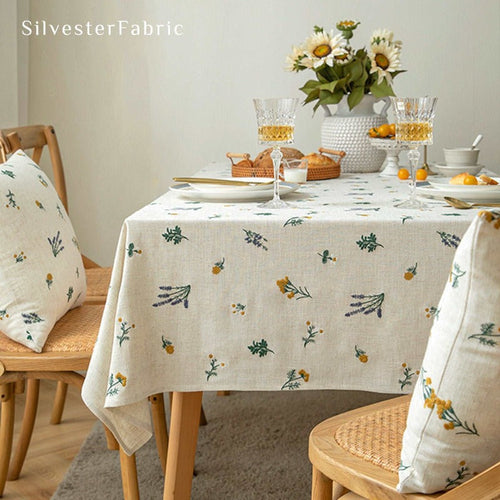
Embroidered Tablecloths for Texture
Embroidered tablecloths add raised texture and stitched detail that printed fabrics cannot match. Motifs — from delicate florals to botanical leaves — bring depth and a tactile quality to any table setting.
Texture You Can Feel
Unlike printed patterns, embroidery has real dimension. The raised threads catch light differently throughout the day, so the surface changes as the light in the room shifts.
Stitched Structure
Each motif is stitched onto the fabric rather than printed on it. The thread sits above the surface, which gives the cloth a visible stitched structure and a finish you can feel with your hand.
Choosing Embroidered Tablecloths for Your Table
Motif Styles
Floral embroidery suits everyday and special-occasion tables. Botanical leaf motifs bring fine organic texture that reads as natural rather than formal. White-on-white embroidery works with most dinnerware and table decor. Geometric embroidered patterns offer a more structured, modern look.
French Embroidery Styles
French embroidered tablecloths usually combine three elements: a light cotton or linen base, a repeating floral or vine motif, and a finished edge. Edge treatments vary by style — a gathered ruffle, a tassel fringe, or a simple rolled hem. Ruffle and scalloped edges follow the outline of round and square tables evenly, which is why these styles pair well with those shapes. Tassel fringe adds weight at the hem and suits rectangle tables where the drop runs straight. Rectangle tables also suit embroidered border bands that run along the long edge.
Color & Thread
Tone-on-tone embroidery — white or cream thread on a matching base — creates subtle texture that works with most decor. Colored embroidery in blues, greens, or warm earth tones adds more personality and can tie into your dishes or seasonal palette. Metallic thread embroidery suits holiday and formal dining.
Fabric Base
The base fabric matters as much as the embroidery. Linen and linen-blend bases have natural texture that complements embroidered motifs. Cotton bases are smoother and let the embroidery stand out more clearly. A heavier base fabric holds the embroidery's shape better and drapes more substantially on the table.
Care & Styling
Most embroidered tablecloths can be machine-washed on a delicate cycle — avoid harsh scrubbing on the stitched areas. Iron on the reverse side to protect the embroidery threads. For styling, let the embroidery be the table's main detail. Pair with solid napkins and simple dishware. A low centerpiece — candles or a small floral arrangement — keeps the focus on the cloth without blocking the embroidered details.
FAQ
Embroidered vs printed tablecloths: what's the difference?
An embroidered tablecloth has decorative patterns created with thread stitched into the fabric, which gives the surface a raised, textured feel. A printed tablecloth has the design applied to the fabric surface with dye or ink, so the pattern is flat and smooth. Embroidered tablecloths usually read as more formal, while printed tablecloths are easier to wash, less expensive, and better suited for daily use. If you want depth and detail, choose embroidery. If you want convenience and pattern variety, choose print.
Are embroidered tablecloths machine washable?
Most embroidered tablecloths are machine washable, but the fabric and thread type determine the best care routine. Linen and cotton embroidered tablecloths can usually be washed on a gentle cycle with cold water and dried on low heat. Avoid bleach on colored embroidery because it can fade the thread. For best results, wash embroidered tablecloths inside out or in a mesh bag to protect the stitched threads from snagging. Always check the care instructions on the specific product page for details.
What fabric is best for an embroidered tablecloth?
Linen and linen-cotton blends are the best fabrics for embroidered tablecloths because the fabric has enough body to hold the stitches firmly and enough drape to fall cleanly over the table edges. Pure cotton is also a strong choice and is easier to wash than pure linen. Polyester and polyester-blend fabrics also carry embroidery well and hold up to frequent washing, though the surface feels smoother and the stitching sits flatter against the fabric. For a balance of durability, texture, and ease of care, choose a linen-cotton blend with tone-on-tone embroidery.
Do embroidered tablecloths look modern or traditional?
Embroidered tablecloths can look either modern or traditional depending on the pattern style and color. Tone-on-tone embroidery in white, cream, or beige on a matching base reads as modern and minimal. Dense multicolor floral embroidery reads as traditional or vintage. Geometric or linear embroidery patterns also tend to look more contemporary. Pair a tone-on-tone embroidered cloth with simple dinnerware and clean lines to keep the table looking current rather than dated.
What is the difference between embroidered and lace tablecloths?
An embroidered tablecloth has thread stitched onto a solid fabric base, so the surface is mostly closed with decorative raised areas. A lace tablecloth is made by creating open patterns in the fabric itself, so the surface has visible holes and a lighter, more delicate feel. Embroidered tablecloths are better for everyday meals and family dining because they cover the table fully. Lace tablecloths are better for formal occasions, holidays, and decorative layering because they are more fragile and usually require a solid cloth underneath.
Are embroidered tablecloths see-through, or do I need a liner underneath?
No. Embroidery is stitched onto a solid woven base, so the cloth blocks the tabletop from view and light does not pass through the way it does with lace or sheer fabric. The stitched areas sit above the surface and read as raised texture rather than openings. White-on-white embroidery can look lighter in a bright room, but the base cloth itself is opaque. If you want visible openwork, that is a lace construction rather than an embroidered one.
What color embroidered tablecloth is best for everyday use?
White, cream, and natural beige are the most practical colors for daily use because they hide minor wear and work with most dinnerware. Tone-on-tone embroidery in the same color family, such as white thread on white fabric, adds texture without introducing a busy pattern that can clash with food or tableware. Avoid dark background colors with light embroidery for everyday use because the contrast shows stains and crumbs more easily. For one versatile cloth, choose a light background with a subtle self-tone embroidery.
Which embroidered tablecloth is best for a formal dinner or special occasion?
For a formal dinner, choose an embroidered tablecloth with a heavier fabric base, such as pure linen or a dense linen-cotton blend, and a more detailed embroidery pattern. White or ivory backgrounds with tone-on-tone or metallic thread embroidery create the most formal look. If you want color, deeper tones such as navy, burgundy, or forest green with contrasting embroidery add weight and presence. Longer drop lengths, typically 12 inches or more, also make the table feel more formal. Pair with matching napkins and a low centerpiece so the embroidery remains visible.
Collections
-

Farmhouse Tablecloths
Farmhouse Tablecloths in Plaid, Striped and Floral Shop farmhouse tablecloths in black-and-white,...
-

Floral Tablecloths
Floral Tablecloths for Round, Square and Rectangle Tables Shop floral tablecloths in...
-

Linen Tablecloths
Linen and Linen Blend Tablecloths for Dining and Weddings Shop linen and...
-

Cotton Tablecloths
Cotton Tablecloths in Floral, Plaid, Striped and Solid Colors Shop cotton and...
-

Striped Tablecloths
Striped Tablecloths in Blue, Green and Two-Tone Designs Shop striped tablecloths for...
-

Plaid Tablecloths
Plaid Tablecloths in Buffalo Check, Gingham and Tartan Shop plaid tablecloths for...
-

Rectangle Tablecloths
Rectangle Tablecloths in 35 to 142 Inch Lengths Shop rectangle tablecloths for...
-

Round Tablecloths
Round Tablecloths in 35, 47, 55 and 59 Inch Sizes Shop round...
-

Square Tablecloths
Square Tablecloths in 35, 47 and 55 Inch Sizes Shop square tablecloths...
-

Embroidered Tablecloths
Embroidered Tablecloths in French and Floral Styles Shop embroidered tablecloths with French-inspired...
-

White Tablecloths
White Tablecloths in Plain, Lace, Embroidered and Jacquard Shop white tablecloths for...
-

Green Tablecloths
Green Tablecloths in Sage, Olive and Deep Holiday Tones Shop green tablecloths...


