

Striped Tablecloths
Striped Tablecloths in Printed, Embroidered and Woven Designs
Shop striped tablecloths for dining tables, kitchen tables, and everyday meals in printed, embroidered, and woven stripe designs. Choose cotton and polyester blends in two-tone and multi-color combinations for a clean, structured table setting.
Shop by Material or Shape or Color
Linen Cotton Rectangle Round Square White Green
Shop by Pattern or Style
Floral Embroidery Plaid Farmhouse French
Not sure about measurements? View our Tablecloth Size Guide.
-
Green Striped Linen Tablecloth
Regular price From $33.32Regular price$47.60Sale price From $33.32Sale -
Grey Striped Linen Tablecloth
Regular price From $33.32Regular price$47.60Sale price From $33.32Sale -
Blue Striped Linen Tablecloth
Regular price From $34.43Regular price$49.19Sale price From $34.43Sale -
Red Striped Linen Tablecloth
Regular price From $34.43Regular price$49.19Sale price From $34.43Sale -
Striped Color Blocks Tablecloth
Regular price From $35.54Regular price$50.78Sale price From $35.54Sale -
Green Stripe Rectangle Tablecloth
Regular price From $33.32Regular price$47.60Sale price From $33.32Sale -
Blue Striped Modern Tablecloth
Regular price From $33.32Regular price$47.60Sale price From $33.32Sale -
Red Holiday Rectangle Tablecloth
Regular price From $39.98Regular price$57.12Sale price From $39.98Sale -
Grey Stripe Farmhouse Tablecloth
Regular price From $35.54Regular price$50.78Sale price From $35.54Sale -
White Geometric Stripe Tablecloth
Regular price From $29.98Regular price$42.83Sale price From $29.98Sale -
Blue Stripe Farmhouse Tablecloth
Regular price From $37.76Regular price$53.95Sale price From $37.76Sale -
Dusty Blue Floral Tablecloth
Regular price From $29.98Regular price$42.83Sale price From $29.98Sale -
Off White Striped Tablecloth
Regular price From $31.10Regular price$34.56Sale price From $31.10Sale -
Off White Striped Tablecloth
Regular price From $31.10Regular price$44.43Sale price From $31.10Sale -
Off White Blue Stripe Tablecloth
Regular price From $31.10Regular price$44.43Sale price From $31.10Sale -
Yellow Stripe Rectangle Tablecloth
Regular price From $31.10Regular price$44.43Sale price From $31.10Sale -
Grey Striped Rectangle Tablecloth
Regular price From $35.54Regular price$50.78Sale price From $35.54Sale -
Beige Striped Embroidered Tablecloth
Regular price From $35.54Regular price$50.78Sale price From $35.54Sale -
Blue Color Block Tablecloth
Regular price From $35.54Regular price$50.78Sale price From $35.54Sale -
Off White Striped Tablecloth
Regular price From $31.10Regular price$44.43Sale price From $31.10Sale -
White Farmhouse Rectangle Tablecloth
Regular price From $35.54Regular price$50.78Sale price From $35.54Sale -
White Embroidered Striped Tablecloth
Regular price From $35.54Regular price$50.78Sale price From $35.54Sale -
Pink Striped Rectangle Tablecloth
Regular price From $35.54Regular price$50.78Sale price From $35.54Sale -
Blue Striped Embroidery Tablecloth
Regular price From $35.54Regular price$50.78Sale price From $35.54Sale -
Sage Green Rectangle Tablecloth
Regular price From $35.54Regular price$50.78Sale price From $35.54Sale -
Sage Green Rectangle Tablecloth
Regular price From $35.54Regular price$50.78Sale price From $35.54Sale -
Striped Green Outdoor Tablecloth
Regular price From $35.54Regular price$50.78Sale price From $35.54Sale -
Sage Green Farmhouse Tablecloth
Regular price From $41.10Regular price$58.72Sale price From $41.10Sale -
White Striped Jacquard Tablecloth
Regular price From $51.10Regular price$73.00Sale price From $51.10Sale -
White Farmhouse Stripe Tablecloth
Regular price From $32.21Regular price$46.02Sale price From $32.21Sale -
Off White Rectangle Tablecloth
Regular price From $44.43Regular price$63.48Sale price From $44.43Sale -
Leaf Stripe Rectangle Tablecloth
Regular price From $44.43Regular price$63.48Sale price From $44.43Sale


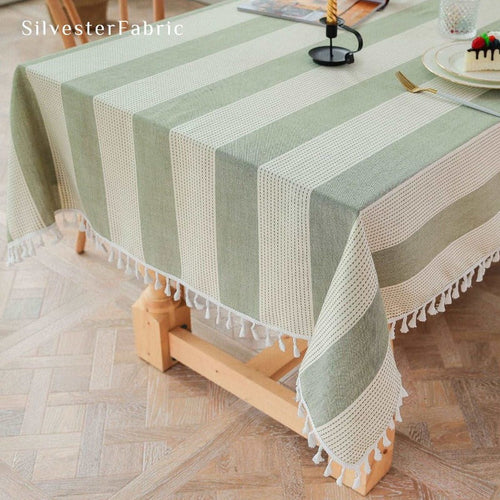
Striped Tablecloths for Classic Style
Striped tablecloths bring clean lines and a sense of order to any table. From fine ticking stripes to bold country-cottage bands, they are one of the most timeless patterns you can choose — never trendy, never out of style.
Classic & Timeless
Stripes have decorated dining tables for generations. Unlike bold prints that come and go, striped tablecloths stay fresh year after year, making them a reliable choice for everyday meals and special gatherings.
Adds Structure & Rhythm
The repeated lines of a striped cloth give the table visual structure. Whether narrow and subtle or wide and bold, stripes create a rhythm that makes the whole table setting feel more organized and intentional.
Choosing Striped Tablecloths for Your Table
Stripe Types
Ticking stripes are narrow, evenly spaced, and feel tailored — perfect for clean, classic looks. Wide cabana stripes make a bolder, more casual statement for outdoor dining and summer meals. Two-tone country stripes in warm neutrals like khaki and cream fit farmhouse and cottage kitchens beautifully.
Color Pairings
Blue and white is the most searched striped tablecloth combo — fresh, coastal, and versatile. Khaki and cream brings warmth and works with wood tones. Navy and white feels slightly more formal for dining rooms. Black and white makes a modern, graphic statement. Choose a palette that ties into your dishes and decor.
Scale & Direction
Narrow stripes feel subtle and work well on smaller tables where busy patterns would be too much. Wide stripes make a stronger visual impact and suit larger table surfaces. Most striped tablecloths run the length of the table, but horizontal stripes can make a small table look wider. Match stripe scale to your table size for the best balance.
Styling Tips
Let the stripes be the main pattern on the table. Pair with solid napkins and simple dishware to avoid visual competition. A plain runner down the center works if the stripes are subtle, but skip it if the stripes are bold. Keep centerpieces simple — a single vase or candle cluster keeps the focus on the pattern.
FAQ
Should stripes on a tablecloth run horizontally or vertically?
The direction depends on your table shape and what you want to emphasize. On a rectangular table, vertical stripes — running along the length from one short end to the other — draw the eye down the table and make it look longer. This is the most common orientation because it aligns with how people face each other at a dining table. Horizontal stripes — running across the width — make the table look wider and can feel more casual, but they also visually cut the table into sections, which can make a long table feel chopped. On a square table, the direction matters less because all sides are equal — choose based on which direction faces the room entrance, since that is the angle most people see first. On a round table, stripes run in one direction across the circle, creating a different look depending on where you stand — there is no wrong direction, but the effect changes as you walk around the table.
What stripe width works best for small vs large tables?
Stripe width changes both the formality and the visual scale of the table. Narrow stripes — under 1 inch wide — read as texture rather than pattern from across the room. They suit small tables, everyday use, and settings where you want the tablecloth to act as a neutral base rather than a focal point. Medium stripes — 1 to 2 inches wide — are the most versatile. They are visible from a distance without dominating the table, and they work on both small and large tables in both casual and formal settings. Wide stripes — 2 to 4 inches or more — make a bold statement and suit larger tables where the pattern has room to repeat. On a small table, wide stripes may only show one or two repeats, making the pattern look incomplete. Varying-width stripes — alternating narrow and wide bands — create a more decorative, designed look that sits between solid and uniform stripes in formality.
Do striped tablecloths make a table look longer or wider?
Yes — stripes create a visual effect similar to how clothing patterns affect body perception. Vertical stripes running along the length of a rectangular table draw the eye in a continuous line from one end to the other, making the table appear longer than it is. This is useful if you want a small table to feel more substantial. Horizontal stripes running across the width break the table into visual bands, making it appear wider but slightly shorter. On a round table, stripes running in any direction create a slight elongation along the stripe axis — the table looks more oval than circular when viewed from across the room. The effect is stronger with high-contrast stripes (navy and white) and weaker with low-contrast combinations (beige and cream). If you have a narrow rectangular table that feels too thin, vertical stripes reinforce the length — pair them with a runner to add width through layering rather than pattern direction.
What napkins and runners go with a striped tablecloth?
Striped tablecloths already carry a strong directional pattern, so accessories should complement rather than compete. Solid-colored napkins are the safest choice — pick a color that matches one of the stripe colors. If the tablecloth has navy and cream stripes, cream napkins soften the look while navy napkins intensify it. Avoid patterned napkins, especially striped ones in a different width — two stripe patterns at different scales create visual tension rather than harmony. For runners, a solid linen-blend runner in a neutral tone adds texture without adding pattern. If you want a patterned runner, choose one with a completely different pattern type — a floral or solid textured runner over a striped tablecloth works because the contrast in pattern type is intentional. The rule: never layer a striped runner over a striped tablecloth, even in different colors. The two stripe directions conflict and make the table look busy.
What dinnerware pairs best with striped tablecloths?
Striped tablecloths have a geometric, structured pattern that pairs best with dinnerware that provides visual contrast through shape and texture rather than additional pattern. Plain white ceramic plates are the default — their smooth, unpatterned surface balances the linear pattern of the tablecloth. Stoneware in solid cream, beige, or soft gray adds a tactile element that complements the geometric stripes without competing. Avoid plates with striped rims — they echo the tablecloth pattern too closely and create a repetitive look. Plates with simple embossed borders or subtle texture work well because they add detail in a different visual language than stripes. For a bolder pairing, choose plates in a solid color that matches the secondary stripe color — if the tablecloth has sage and cream stripes, sage plates tie the setting together. Avoid heavily patterned plates like florals or geometric prints — the combination of stripe-on-pattern creates visual noise that makes the table feel cluttered.
What is the difference between striped, plaid, and checkered tablecloths?
These three patterns are related but structurally different. Striped tablecloths have lines running in a single direction — all parallel, all the same axis. The pattern is one-dimensional and directional. Plaid tablecloths have lines running in two directions — horizontal and vertical — that cross each other to form a grid of overlapping rectangles. Plaid is two-dimensional and includes color blocks where the lines intersect. Checkered tablecloths (including gingham) have a regular grid of alternating colored squares — equal in size and arranged like a checkerboard. Checkered is the most rigidly structured of the three. In practical terms: stripes are the simplest and most modern-looking, plaid is the most traditional and complex, and checkered sits in between with a clean grid that reads as orderly. If you want a minimalist look, choose stripes. If you want a rustic or farmhouse look, choose plaid. If you want a classic, structured look, choose checkered.
Are striped tablecloths casual or formal?
Striped tablecloths can be either — the formality depends on stripe width, color contrast, and fabric. Narrow stripes in low-contrast colors (beige and cream, sage and white) on cotton or linen-blend fabric read as understated and work well for formal dining. The subtle pattern adds depth without drawing attention, similar to a textured solid. Wide stripes in high-contrast colors (navy and white, black and cream) read as bold and casual — they suit everyday kitchen tables, brunches, and informal gatherings. The fabric also influences formality: matte cotton and linen blends lean more formal, while glossy polyester leans more casual. If you want one striped tablecloth that works across settings, choose medium-width stripes (1–2 inches) in a two-tone neutral palette like navy and cream — it reads as structured enough for hosted meals but relaxed enough for daily use. For maximum formality, choose tone-on-tone stripes where the two colors are very close in value, such as ivory and cream.
Do striped tablecloths work for round tables?
Yes, but the effect differs from rectangular tables. On a round table, stripes run straight across the circle, which means the pattern looks different depending on where you stand. From one angle, the stripes create a clear linear effect across the table. From a 90-degree angle, the stripes appear to curve along the table's edge, creating a softer, more organic look. This changing perspective can be a feature or a drawback depending on your preference. Narrow stripes adapt to round tables more naturally than wide stripes — the finer pattern follows the curve without distortion. Wide stripes on a round table can look cut off at the edges, where the stripe meets the circular hem. If you have a round table and want a striped tablecloth, choose narrow to medium stripes (under 2 inches) in a two-tone palette. Avoid wide stripes on round tables smaller than 40 inches — the limited surface area cannot show enough stripe repeats to make the pattern read clearly.
Collections
-

Farmhouse Tablecloths
Farmhouse Tablecloths in Plaid, Gingham and Striped Cotton Shop farmhouse tablecloths for...
-

Floral Tablecloths
Floral Tablecloths for Round, Square and Rectangle Tables Choose floral tablecloths for...
-

Linen Tablecloths
Linen Tablecloths for Dining Tables, Weddings and Events Find linen and linen-blend...
-

Cotton Tablecloths
Cotton Tablecloths for Kitchen, Dining and Outdoor Tables Shop breathable cotton tablecloths...
-

Striped Tablecloths
Striped Tablecloths in Printed, Embroidered and Woven Designs Shop striped tablecloths for...
-

Plaid Tablecloths
Plaid Tablecloths in Buffalo Check, Gingham and Tartan Shop plaid tablecloths for...
-

Rectangle Tablecloths
Rectangle Tablecloths for 2 to 12 Seat Dining Tables Find rectangle tablecloths...
-

Round Tablecloths
Round Tablecloths for Dining, Patio and Party Tables Find round tablecloths for...
-

Square Tablecloths
Square Tablecloths for Kitchen, Dining and Coffee Tables Shop square tablecloths for...
-

Embroidered Tablecloths
Embroidered Tablecloths in French and Floral Styles Shop embroidered tablecloths with French-inspired...
-

White Tablecloths
White Tablecloths in Plain, Lace, Embroidered and Jacquard Shop white tablecloths for...
-

Green Tablecloths
Green Tablecloths in Sage, Olive and Deep Holiday Tones Shop green tablecloths...


