

Lace Curtains
Lace Curtains for Kitchen, Bedroom and Cottage Windows
Find lace curtains for soft light filtering, gentle daytime privacy, and vintage-inspired window decor. A bright, airy choice for kitchen windows, bedrooms, cottage interiors, and layered curtain looks.
Shop by Room or Length
Living Room Bedroom Kitchen 84-86" Curtains 94-96" Curtains
Shop by Material or Style
Linen Cotton Floral Farmhouse French Embroidery Striped Sheer
Not sure about measurements? View our Curtain Size Guide.
-
Black Lace Sheer Curtain
Regular price From $39.98Regular price$57.12Sale price From $39.98Sale -
Green Lace Sheer Curtain
Regular price From $39.98Regular price$57.12Sale price From $39.98Sale -
Black Floral Sheer Curtain
Regular price From $39.98Regular price$57.12Sale price From $39.98Sale -
White Sheer Lace Curtain
Regular price From $39.98Regular price$57.12Sale price From $39.98Sale -
Beige Lace Sheer Curtain
Regular price From $31.10Regular price$44.43Sale price From $31.10Sale -
White Lace Sheer Curtain
Regular price From $31.10Regular price$44.43Sale price From $31.10Sale -
White French Sheer Curtain
Regular price From $38.87Regular price$55.53Sale price From $38.87Sale -
White Floral Sheer Curtain
Regular price From $38.87Regular price$55.53Sale price From $38.87Sale -
Olive Green Lace Curtain
Regular price From $33.32Regular price$47.60Sale price From $33.32Sale -
Yellow Lace Sheer Curtain
Regular price From $33.32Regular price$47.60Sale price From $33.32Sale -
Blue Lace Sheer Curtain
Regular price From $33.32Regular price$47.60Sale price From $33.32Sale -
Brown Lace Sheer Curtain
Regular price From $33.32Regular price$47.60Sale price From $33.32Sale -
Green Sheer Lace Curtain
Regular price From $31.10Regular price$44.43Sale price From $31.10Sale -
Pink Sheer Lace Curtain
Regular price From $31.10Regular price$44.43Sale price From $31.10Sale -
Orange Sheer Lace Curtain
Regular price From $31.10Regular price$44.43Sale price From $31.10Sale -
Black Sheer Lace Curtain
Regular price From $31.10Regular price$44.43Sale price From $31.10Sale -
White Lace Sheer Curtain
Regular price From $33.32Regular price$47.60Sale price From $33.32Sale -
White Sheer Lace Curtain
Regular price From $35.54Regular price$50.78Sale price From $35.54Sale -
White Sheer Lace Curtain
Regular price From $35.54Regular price$50.78Sale price From $35.54Sale -
Brown Wheat Sheer Curtain
Regular price From $36.65Regular price$52.36Sale price From $36.65Sale -
Black Wheat Sheer Curtain
Regular price From $36.65Regular price$52.36Sale price From $36.65Sale -
White Leaf Sheer Curtain
Regular price From $32.21Regular price$46.02Sale price From $32.21Sale -
Grey Leaf Sheer Curtain
Regular price From $32.21Regular price$46.02Sale price From $32.21Sale -
Yellow Sheer Lace Curtain
Regular price From $35.54Regular price$50.78Sale price From $35.54Sale -
Pink French Sheer Curtain
Regular price From $33.32Regular price$47.60Sale price From $33.32Sale


FAQs
What interior styles work best with lace curtains?
Lace curtains naturally suit cottage, farmhouse, French country, vintage, and traditional interiors where texture and patterned light are part of the room's character. Floral lace patterns lean toward cottage and farmhouse; geometric lace patterns complement transitional and minimalist spaces that still want softness without heavy drapery. Lace works less well in ultra-modern or industrial rooms where the aesthetic favors solid surfaces and flat textures.
Are lace curtains considered a farmhouse or traditional style?
Both. Lace curtains have been used in farmhouse and traditional interiors for over a century, so they read as authentic to both styles. In farmhouse rooms, floral lace pairs with apron sinks, shiplap, and painted wood. In traditional rooms, lace softens formal drapery and adds a lighter layer over solid panels. The pattern type shifts the reading: floral lace leans farmhouse and cottage; geometric lace leans traditional and transitional.
Can lace curtains be used on French doors and specialty windows?
Yes. Lace panels work on French doors when mounted on a tension rod or magnetic rod inside the glass frame, holding the lace flat against the pane. For specialty shapes — arched windows, half-rounds, sidelights — lace can be hemmed to fit because the open weave tolerates custom cuts without fraying as aggressively as woven cotton. Short lace panels are commonly used on sidelights (the narrow windows flanking entry doors) for daytime privacy without blocking light.
Do lace curtains collect dust and how do you keep them clean daily?
The open mesh structure does catch more dust than flat sheer panels. For daily maintenance, shake panels out weekly or vacuum gently with an upholstery brush attachment on low suction. For deeper cleaning, machine wash every 3–6 months (every 1–3 months in kitchens). Polyester lace releases dust easily because the smooth synthetic fibers do not hold particles the way cotton fibers do.
Are lace curtains available in colors other than white?
Yes. White and ivory are the most common because they maximize light transmission and match any wall color. Select styles are available in green, blue, beige, and soft neutral shades. Colored lace uses the same polyester yarn, so washability and color fastness match white versions. One detail to note: on colored lace panels, the pleater tape band (used for hook header style) remains white, creating a visible contrast at the top of the curtain.
Can lace curtains be used year-round or are they mainly for spring and summer?
Year-round. Lace is not a seasonal fabric — the polyester base does not absorb moisture or degrade in temperature changes. In summer, lace panels filter bright sun without blocking breezes. In winter, they diffuse low-angle sun and can be layered behind solid panels for insulation. Customers in cold climates often use lace as a permanent inner layer, pairing it with heavier panels that close only on the coldest nights.
How long do polyester lace curtains typically last?
Polyester lace curtains typically last 3–5 years with normal use and proper care. The polyester yarn resists fading, yellowing, and pattern distortion through 50+ wash cycles. The main factor that shortens lifespan is mechanical snagging — pulling the lace against rough surfaces, pet claws, or jewelry. With mesh-bag washing and gentle handling, panels can last beyond 5 years without visible degradation.
Can lace curtains be layered with blinds instead of solid curtains?
Yes. Layering lace over blinds is a common solution for rooms that want patterned light by day and full coverage at night. Install lace panels on a rod outside the blind mount. Keep blinds open during the day so the lace filters light; close the blinds at night for privacy. Wood blinds and faux-wood blinds pair well with lace because the natural texture complements the woven pattern. Roller shades and cellular shades also work — choose a light-filtering shade rather than a blackout shade so the lace still shows.
Curtain Related Guides
Lace Curtains Guide: Privacy, Styles & Layering Tips
Lace Curtains for a Soft, Stylish Home
How to Choose Curtains: Complete Buying Guide
Curtain Hanging Style - Rod Pocket, Grommets, Hooks
Curtains by Room: Bedroom, Living Room & Kitchen Guide
Curtain Opacity Guide | Sheer, Light-Filtering & Room-Darkening
Collections
-

Linen Tablecloths
Linen Tablecloths for Dining Tables, Weddings and Events Find linen and linen-blend...
-

Table Runners
Table Runners for Dining Tables, Holidays and Hosting Find table runners in...
-

Floral Tablecloths
Floral Tablecloths for Round, Square and Rectangle Tables Choose floral tablecloths for...
-

Throw Blankets
Throw Blankets for Sofa, Bed and Picnic Shop soft throw blankets for...
-
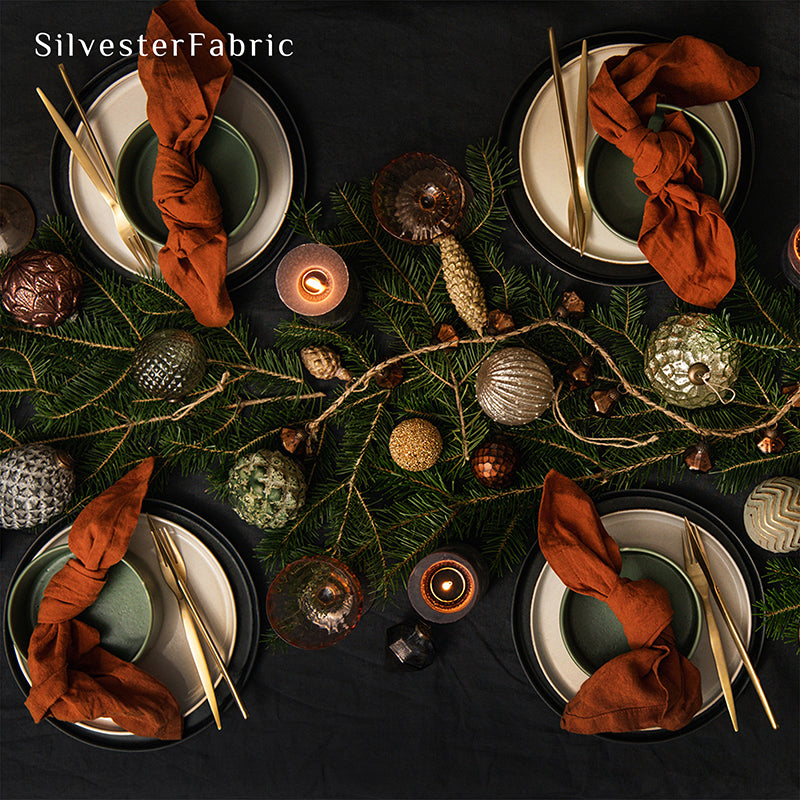
Table Linens
Table Linens: Placemats, Napkins, Coasters and Aprons Shop coordinated table linens for...


