

White Tablecloths
White Tablecloths in Plain, Lace, Embroidered and Jacquard
Shop white tablecloths for dining tables, kitchen tables, and formal occasions in plain, lace, embroidered, and jacquard textures. Choose cotton and polyester blends in rectangle, round, and square sizes with tone-on-white stitching and woven patterns that pair with any dishware and centerpiece.
Shop by Material or Shape or Color
Linen Cotton Rectangle Round Square Green
Shop by Pattern or Style
Floral Embroidery Striped Plaid Farmhouse French
Not sure about measurements? View our Tablecloth Size Guide.
-
French Floral White Tablecloth
Regular price From $41.10Regular price$58.72Sale price From $41.10Sale -
French White Floral Tablecloth
Regular price From $36.65Regular price$52.36Sale price From $36.65Sale -
White French Cotton Tablecloth
Regular price From $61.10Regular price$87.29Sale price From $61.10Sale -
White French Floral Tablecloth
Regular price From $46.65Regular price$66.65Sale price From $46.65Sale -
White Striped Farmhouse Tablecloth
Regular price From $35.54Regular price$50.78Sale price From $35.54Sale -
White Farmhouse Striped Tablecloth
Regular price From $35.54Regular price$50.78Sale price From $35.54Sale -
White Farmhouse Rectangle Tablecloth
Regular price From $35.54Regular price$50.78Sale price From $35.54Sale -
White Embroidered Striped Tablecloth
Regular price From $35.54Regular price$50.78Sale price From $35.54Sale -
Solid White Farmhouse Tablecloth
Regular price From $38.87Regular price$55.53Sale price From $38.87Sale -
White Striped Jacquard Tablecloth
Regular price From $51.10Regular price$73.00Sale price From $51.10Sale -
White Farmhouse Waffle Tablecloth
Regular price From $36.65Regular price$52.36Sale price From $36.65Sale -
White Plaid Farmhouse Tablecloth
Regular price From $35.54Regular price$50.78Sale price From $35.54Sale -
White Floral Lace Tablecloth
Regular price From $28.87Regular price$41.25Sale price From $28.87Sale -
White Floral French Tablecloth
Regular price From $28.87Regular price$41.25Sale price From $28.87Sale -
White French Tufted Tablecloth
Regular price From $32.21Regular price$46.02Sale price From $32.21Sale -
Solid White Rectangle Tablecloth
Regular price From $37.76Regular price$53.95Sale price From $37.76Sale


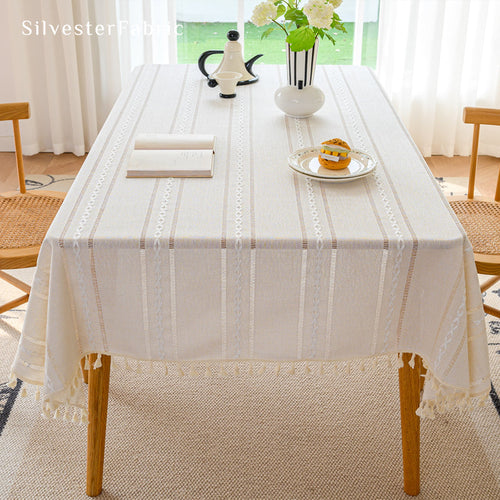
White Tablecloths for Clean Style
White tablecloths are the most versatile choice for any dining table. They brighten the room, make every color of food and dishware stand out, and work for everything from a casual weeknight dinner to a formal holiday feast.
Maximizes Brightness
White reflects more light than any other color, making dining rooms feel brighter, cleaner, and more open. For dim or north-facing rooms, a white tablecloth is the easiest way to lighten the whole space.
Goes With Everything
White pairs with every dishware style, every wall color, and every decorating direction. You can change your napkins, centerpiece, and decor with the seasons, and a white tablecloth will still work — no need to buy a new one.
Choosing White Tablecloths for Your Table
Shades of White
Pure white feels crisp, clean, and modern — the brightest option for contemporary spaces. Off-white and ivory feel softer and warmer, fitting farmhouse, cottage, and traditional interiors. Cream and natural white have a warm undertone that pairs beautifully with wood furniture and adds coziness. Linen-white has a slightly textured, organic look. Choose your shade based on how warm or cool you want the room to feel.
Material & Opacity
White linen and linen-blend tablecloths add natural texture and a relaxed, organic feel. White cotton and cotton-blend cloths are smooth, soft, and easy to care for — the most practical everyday choice. White damask or jacquard tablecloths add woven texture and a more formal, traditional look. The fabric matters more with white than any other color because the texture is fully visible.
Practical Considerations
White tablecloths show stains more easily than colored or patterned cloths, so they need more frequent washing. For everyday use, choose a cotton-blend or polyester-blend white tablecloth that handles regular washing well. For special occasions, pure linen or damask white cloths look the most refined. Stain-removal sprays and prompt washing keep white tablecloths looking fresh. Many households keep one white cloth for special meals and a patterned or darker cloth for daily use.
Styling Tips
White tablecloths are a blank canvas. Add color through napkins, a runner, placemats, and a centerpiece. For a formal look, pair white linen with white dishes and silver flatware. For a farmhouse look, add a natural linen runner and stoneware dishes. For a seasonal look, switch napkins and accessories — sage green for spring, mustard for fall, red for Christmas. The white tablecloth stays the same while the table changes completely.
FAQ
What is the difference between a white tablecloth and an ivory tablecloth?
White tablecloths have a neutral base with zero warm undertone — they reflect all wavelengths of light equally, which makes them look crisp under any lighting. Ivory tablecloths carry a faint yellow undertone that reads as warm rather than bright. Under cool LED kitchen lighting, a white tablecloth stays sharp and clean, while an ivory one may shift toward cream. Under warm incandescent dining room lighting, white can look slightly blue, while ivory looks soft and natural. If your dishes are white, a white tablecloth creates a seamless tonal layer; an ivory tablecloth against white plates creates a visible contrast that some people find warm and others find mismatched. If your table is dark wood, white provides a sharper contrast; ivory blends more gradually with medium wood tones like oak or cherry.
What types of white tablecloths are available — plain or textured?
White tablecloths come in four main texture types, each with a different visual effect. Plain white tablecloths have a smooth, flat surface with no pattern — they read as clean and minimal, and work as a base for any tableware. White lace tablecloths have an open weave with decorative holes and patterns — they are semi-transparent, so the table surface shows through, which makes them popular for layered settings over a solid cloth. White embroidered tablecloths use tone-on-white stitching to create striped, checkered, or floral patterns — the design is subtle from a distance but visible up close, making them suitable for formal dining. White jacquard tablecloths have patterns woven directly into the fabric during production — the design is raised and catches light at different angles throughout the day, creating depth without adding color. All four types are white throughout, with no colored threads.
How can I tell if a white tablecloth is truly white or off-white?
When shopping online, three clues help you distinguish true white from off-white. First, check the product description for the word "white" alone — if the listing says "ivory," "cream," "off-white," or "natural," the color is not true white. Second, look at the product photos against a known reference: if the tablecloth is photographed next to white plates or napkins and matches them exactly, it is true white; if it looks even slightly darker or warmer than the plates, it is off-white. Third, check the material — polyester and cotton blends are most commonly produced in true white, while pure linen and natural cotton often have a faint cream tone unless they have been bleached or optically brightened.
How do I keep a white tablecloth from turning yellow?
Most yellowing is preventable — it comes from small habits, not fabric aging. Letting food sit overnight: a coffee ring bonds with fibers within hours, so blot with cold water immediately. Overusing detergent: excess soap leaves a film that attracts dust and yellows over time — use half the recommended amount and add a second rinse. Ignoring sunlight: UV yellows the center of window-facing tables faster than edges — a runner or placemat blocks most damage. Wash at 30°C (86°F) or below. Store folded in a closet, never in plastic — trapped humidity restarts yellowing even when clean.
Are white tablecloths suitable for everyday use, or just for formal occasions?
White tablecloths work for everyday use — the idea that white is only for formal occasions comes from older conventions that no longer match how people actually live. For daily meals, a plain white cotton or polyester tablecloth is practical because you can see spills immediately and wash the whole cloth before stains set. Dark-colored tablecloths hide stains longer, but the food residue is still there, accumulating in the fibers with each use. The key to using white tablecloths daily is choosing a machine-washable fabric — polyester blends are the lowest maintenance because they resist wrinkles and shrinkage, while cotton requires more ironing. Reserve white lace and white jacquard for occasions where you want texture, and keep a plain white tablecloth for Monday-through-Friday meals. If you have young children, placemats on top of the white tablecloth catch the majority of daily spills and extend the time between full washes.
What centerpiece works best on a white tablecloth?
On a white tablecloth, whatever you place in the center becomes the entire statement — there is no pattern to blend into. The common mistake is going too tall: anything above 12 inches blocks eye contact and splits the table into two sides. Keep centerpieces low and wide — a shallow bowl with lemons for everyday, three staggered candles (4, 6, 8 inches) for hosted meals, or a potted herb for texture. One rule for white fabric: any object with a dyed, painted, or rust-prone base needs a placemat or tray underneath to prevent transfer marks that washing will not remove.
Should I choose a white lace tablecloth or a plain white tablecloth?
The choice depends on how much of the table surface you want visible. A plain white tablecloth fully covers the table and creates a solid, clean surface — it works for every meal and every tableware style, and it hides table scratches and watermarks completely. A white lace tablecloth is semi-transparent, so the table surface shows through the open weave — this means a beautiful wood table adds warmth and pattern through the lace, but a scratched or stained table will also show through. Lace is best layered over a solid white or colored cloth for a dimensional look, or used alone on a table you want to show off. For daily family meals with frequent spills, plain white is more practical because lace requires gentler washing and the open weave traps crumbs. For special occasions, brunches, and cottage-style settings, lace adds a texture that plain white cannot match.
Do white tablecloths show stains more than colored ones?
Yes, white tablecloths show stains more visibly than medium and dark-colored ones — but this is actually an advantage. Because stains are visible immediately, you can treat them before they set. On a dark tablecloth, a coffee spill may go unnoticed until it has dried and oxidized into a permanent mark. On a white tablecloth, the same spill is obvious within seconds, giving you time to blot it with cold water before the pigment bonds with the fibers. The practical result is that white tablecloths often come out cleaner after washing than dark ones, because every stain gets treated. The trade-off is that white tablecloths need washing more frequently — after every meal with visible food, rather than every few meals. If you want the look of white without the washing frequency, use a white tablecloth for the table base and add colored placemats at each setting to catch the majority of daily spills.
Collections
-

Farmhouse Tablecloths
Farmhouse Tablecloths in Plaid, Gingham and Striped Cotton Shop farmhouse tablecloths for...
-

Floral Tablecloths
Floral Tablecloths for Round, Square and Rectangle Tables Choose floral tablecloths for...
-

Linen Tablecloths
Linen Tablecloths for Dining Tables, Weddings and Events Find linen and linen-blend...
-

Cotton Tablecloths
Cotton Tablecloths for Kitchen, Dining and Outdoor Tables Shop breathable cotton tablecloths...
-

Striped Tablecloths
Striped Tablecloths in Printed, Embroidered and Woven Designs Shop striped tablecloths for...
-

Plaid Tablecloths
Plaid Tablecloths in Buffalo Check, Gingham and Tartan Shop plaid tablecloths for...
-

Rectangle Tablecloths
Rectangle Tablecloths for 2 to 12 Seat Dining Tables Find rectangle tablecloths...
-

Round Tablecloths
Round Tablecloths for Dining, Patio and Party Tables Find round tablecloths for...
-

Square Tablecloths
Square Tablecloths for Kitchen, Dining and Coffee Tables Shop square tablecloths for...
-

Embroidered Tablecloths
Embroidered Tablecloths in French and Floral Styles Shop embroidered tablecloths with French-inspired...
-

White Tablecloths
White Tablecloths in Plain, Lace, Embroidered and Jacquard Shop white tablecloths for...
-

Green Tablecloths
Green Tablecloths in Sage, Olive and Deep Holiday Tones Shop green tablecloths...


