

Green Tablecloths
Green Tablecloths in Sage, Olive and Deep Holiday Tones
Shop green tablecloths for dining tables, kitchen tables, and seasonal gatherings in solid, embroidered, printed, and jacquard styles. Choose cotton and polyester blends with white embroidery, contrast prints, and border trims in rectangle, round, and square sizes for everyday meals and holiday settings.
Shop by Material or Shape or Color
Linen Cotton Rectangle Round Square White
Shop by Pattern or Style
Floral Embroidery Striped Plaid Farmhouse French
Not sure about measurements? View our Tablecloth Size Guide.
-
Solid Green Round Tablecloth
Regular price From $33.32Regular price$47.60Sale price From $33.32Sale -
Ruffled Green Rectangle Tablecloth
Regular price From $45.54Regular price$65.06Sale price From $45.54Sale -
Olive Green Round Tablecloth
Regular price From $36.65Regular price$52.36Sale price From $36.65Sale -
Sage Green Rectangle Tablecloth
Regular price From $35.54Regular price$50.78Sale price From $35.54Sale -
Sage Green Rectangle Tablecloth
Regular price From $35.54Regular price$50.78Sale price From $35.54Sale -
Striped Green Outdoor Tablecloth
Regular price From $35.54Regular price$50.78Sale price From $35.54Sale -
Sage Green Farmhouse Tablecloth
Regular price From $41.10Regular price$58.72Sale price From $41.10Sale -
Green Rectangle Outdoor Tablecloth
Regular price From $36.65Regular price$52.36Sale price From $36.65Sale -
Green Floral Rectangle Tablecloth
Regular price From $33.32Regular price$47.60Sale price From $33.32Sale -
Green Floral Linen Tablecloth
Regular price From $29.98Regular price$42.83Sale price From $29.98Sale -
Green Farmhouse Floral Tablecloth
Regular price From $32.21Regular price$46.02Sale price From $32.21Sale -
Green Botanical Rectangle Tablecloth
Regular price From $28.87Regular price$41.25Sale price From $28.87Sale -
Green Floral Cotton Tablecloth
Regular price From $35.54Regular price$50.78Sale price From $35.54Sale -
Green Striped Linen Tablecloth
Regular price From $33.32Regular price$47.60Sale price From $33.32Sale -
Green Wreath Christmas Tablecloth
Regular price From $33.32Regular price$47.60Sale price From $33.32Sale -
Green Christmas Plaid Tablecloth
Regular price From $31.10Regular price$44.43Sale price From $31.10Sale -
Solid Green Rectangle Tablecloth
Regular price From $37.76Regular price$53.95Sale price From $37.76Sale


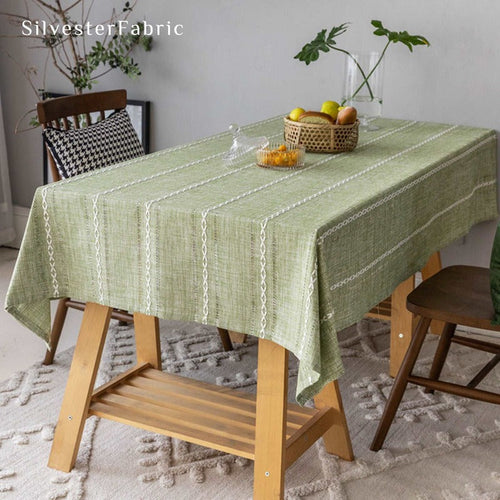
Green Tablecloths for Natural Warmth
Green tablecloths bring the outdoors to your dining table. From soft sage to deep hunter green, they add a grounded, organic warmth that makes every meal feel a little more connected to nature.
Calming & Grounded
Green has a naturally soothing effect. It lowers visual stress and creates a restful, welcoming mood at the table — perfect for slow weekend breakfasts, family dinners, and gatherings where you want people to linger.
Connects to Nature
Green is the color of leaves, herbs, and gardens. On a tablecloth, it creates a natural bridge between your food and your decor, making fresh salads, roasted vegetables, and wooden serving pieces look right at home.
Choosing Green Tablecloths for Your Table
Shades of Green
Sage green is the most popular and versatile — soft, muted, and easy to pair with cream, wood tones, and natural textures. Olive and moss green add warmth and depth, pairing beautifully with autumn decor and rustic settings. Hunter and forest green feel richer and more dramatic, working well for formal dining and holiday tables. Pale mint and seafoam feel fresh and airy for spring and summer.
Color Pairing
Green pairs naturally with cream, beige, and warm white for a soft, organic palette. It complements wood tones from light oak to dark walnut. For contrast, pair green tablecloths with brass, gold, or black accents. For a richer, seasonal look, combine green with terracotta, mustard, or burgundy. Avoid pairing green with too many other strong colors — let it be the natural anchor of the table.
Style Direction
Sage green in linen or cotton feels perfectly farmhouse and country. Deep emerald or hunter green in a smooth weave adds modern luxury to a dining room. Olive green in a floral or plaid pattern works for cottage and rustic styles. Muted green in a solid cotton-blend fits modern minimalist spaces. Match the shade and fabric to your room's overall direction.
Styling Tips
Let the green tablecloth set the table's natural mood. Pair with white or cream dishes so the food stands out against the colored cloth. Add a natural linen runner for texture. Use wooden serving bowls and fresh greenery — herbs, eucalyptus, or ferns — as a centerpiece to reinforce the organic feel. For seasonal updates, keep the green cloth and swap napkin colors — cream for everyday, mustard for fall, red for Christmas.
FAQ
What shades of green tablecloths are available?
Green tablecloths come in three main shades, each with a different mood. Sage green is a soft, muted green with gray undertones — it reads as calm and natural, making it the most versatile choice for everyday dining and spring or summer tables. Olive green carries warm yellow undertones — it feels earthy and grounded, pairing naturally with wood tables and autumn settings. Deep green includes forest and emerald tones — these are richer and more formal, designed for holiday tables, Christmas dinners, and hosted gatherings. Sage and olive work across all four seasons, while deep green is strongest from late autumn through winter.
What color napkins go best with a green tablecloth?
Green tablecloths have a stronger color presence than white, so napkin choices should either complement or contrast intentionally. White napkins create a clean, crisp contrast against sage and olive — the most popular pairing for everyday meals. Cream or oatmeal napkins soften the contrast for a more relaxed, farmhouse look. Mustard yellow napkins add warmth and work especially well with olive green in autumn. Navy napkins provide a cool contrast that suits deep green for formal dinners. Burgundy napkins pair with deep green for Christmas and winter holiday tables. Avoid napkins in the same green shade as the tablecloth — the lack of contrast makes the table look flat.
Are green tablecloths better at hiding stains than white ones?
Yes, green tablecloths hide most food and drink stains better than white ones. Coffee, red wine, sauce drips, and grease marks are far less visible on sage and olive green than on white fabric. This makes green tablecloths practical for households with children or for meals where spills are likely. The trade-off is that light-colored food crumbs — rice, bread, salt, sugar — show up more clearly on darker green surfaces than on white. For everyday use, green tablecloths need washing less frequently than white ones because minor marks do not show. For formal meals where you want every spot visible so it can be treated immediately, white remains the better choice.
How do I keep green tablecloth colors vibrant and prevent fading?
Fading is the main color-care concern for green tablecloths — unlike white tablecloths, which yellow, colored tablecloths lose vibrancy over time. Three habits prevent most fading. First, wash green tablecloths inside out — this reduces friction on the visible surface during the wash cycle. Second, avoid detergents containing bleach or optical brighteners, which strip color from dyed fabrics — use a mild detergent formulated for colors. Third, keep green tablecloths off tables that receive direct sunlight for more than four hours a day — UV is the single biggest cause of color loss. If your table is near a window, rotate the tablecloth weekly or use a runner to cover the sun-exposed center. Line dry in shade rather than in direct sun, which accelerates fading on green and olive tones.
What table surface works best with a green tablecloth?
Green tablecloths interact with wood tones differently than white ones. Against warm wood tables — oak, cherry, pine, and walnut — sage and olive green create a natural, earthy combination that feels cohesive. Against medium wood tones like teak or maple, sage green provides a soft contrast without clashing. Against dark wood like espresso or mahogany, olive green blends into a rich, moody palette suited to formal dining. Against white or painted tables, green becomes the focal color — sage reads as fresh and modern, while deep green makes a stronger style statement. Against glass tables, green tablecloths work well because the green color is visible through the glass underside, creating a layered effect. The pairing to avoid is cool gray wood with olive green — the warm undertones in olive clash with the cool tone of gray-stained wood.
Can I use a green tablecloth for Christmas and holiday tables?
Yes — deep green is one of the most popular Christmas tablecloth colors. Deep green tablecloths pair naturally with red napkins, gold candle holders, and pine or cedar centerpieces for a classic holiday table. For a modern Christmas look, pair deep green with white napkins and silver or brass accents instead of red. Sage green also works for holiday tables when you want a lighter, less traditional palette — pair it with cream napkins and natural wood or rattan accessories. Beyond Christmas, green tablecloths suit Thanksgiving when layered with rust, mustard, and burgundy accents. For Easter and spring gatherings, sage green with white embroidery or floral prints creates a fresh seasonal table without needing a dedicated holiday-themed cloth.
Does a green tablecloth work for everyday dining or is it too bold?
Sage and olive green tablecloths work well for everyday dining — they are not too bold when paired correctly. Sage green is the closest to a neutral among green shades because its gray undertones soften the color, making it read as a muted backdrop rather than a strong statement. Olive green has more presence but still feels grounded and earthy on a daily table. The key to using green every day is keeping the rest of the table simple — white or cream plates, neutral napkins, and minimal centerpieces let the green tablecloth be the only color statement. Deep green is the one shade better reserved for occasions — its richness can feel heavy on a Tuesday dinner table but looks intentional for hosted meals and holidays. If you want one green tablecloth for all uses, sage is the most adaptable.
What embroidery and trim details look best on green tablecloths?
White embroidery is the most common and versatile detail on green tablecloths. White thread on sage or olive green creates a clear contrast that highlights the pattern — striped, checkered, floral, or geometric designs — without introducing a second color. White printed patterns achieve a similar effect with a softer, less textured finish. White border trims and edge details frame the tablecloth cleanly and work well on both casual and formal green tablecloths. For a more subdued look, cream embroidery threads blend partially with the green base, creating a subtle pattern that is visible only up close. The detail to avoid is dark embroidery on dark green — the lack of contrast makes the pattern invisible from across the table. If you want maximum pattern visibility, choose white embroidery on sage or olive green.
Collections
-

Farmhouse Tablecloths
Farmhouse Tablecloths in Plaid, Gingham and Striped Cotton Shop farmhouse tablecloths for...
-

Floral Tablecloths
Floral Tablecloths for Round, Square and Rectangle Tables Choose floral tablecloths for...
-

Linen Tablecloths
Linen Tablecloths for Dining Tables, Weddings and Events Find linen and linen-blend...
-

Cotton Tablecloths
Cotton Tablecloths for Kitchen, Dining and Outdoor Tables Shop breathable cotton tablecloths...
-

Striped Tablecloths
Striped Tablecloths in Printed, Embroidered and Woven Designs Shop striped tablecloths for...
-

Plaid Tablecloths
Plaid Tablecloths in Buffalo Check, Gingham and Tartan Shop plaid tablecloths for...
-

Rectangle Tablecloths
Rectangle Tablecloths for 2 to 12 Seat Dining Tables Find rectangle tablecloths...
-

Round Tablecloths
Round Tablecloths for Dining, Patio and Party Tables Find round tablecloths for...
-

Square Tablecloths
Square Tablecloths for Kitchen, Dining and Coffee Tables Shop square tablecloths for...
-

Embroidered Tablecloths
Embroidered Tablecloths in French and Floral Styles Shop embroidered tablecloths with French-inspired...
-

White Tablecloths
White Tablecloths in Plain, Lace, Embroidered and Jacquard Shop white tablecloths for...
-

Green Tablecloths
Green Tablecloths in Sage, Olive and Deep Holiday Tones Shop green tablecloths...


