

White Curtains
White Curtains for Bright, Airy Rooms
White curtains bring light and openness to any space. From sheer linen panels that filter sunlight to solid cotton curtains that offer privacy, our white curtain collection covers every room and window size.
Shop by Room or Length
Living Room Bedroom Kitchen 84-86" Curtains 94-96" Curtains
Shop by Material or Style
Linen Cotton Floral Farmhouse French Embroidery Striped Sheer
Not sure about measurements? View our Curtain Size Guide.
-
White Farmhouse Tassel Curtain
Regular price From $39.98Regular price$57.12Sale price From $39.98Sale -
White Farmhouse Long Curtain
Regular price From $39.98Regular price$57.12Sale price From $39.98Sale -
White Plaid Farmhouse Curtain
Regular price From $35.54Regular price$50.78Sale price From $35.54Sale -
White Embroidered Striped Curtain
Regular price From $35.54Regular price$50.78Sale price From $35.54Sale -
White Striped Farmhouse Curtain
Regular price From $35.54Regular price$50.78Sale price From $35.54Sale -
White Striped Farmhouse Curtain
Regular price From $35.54Regular price$50.78Sale price From $35.54Sale -
White Embroidered Plaid Curtain
Regular price From $35.54Regular price$50.78Sale price From $35.54Sale -
White Plaid Farmhouse Curtain
Regular price From $35.54Regular price$50.78Sale price From $35.54Sale -
Curtain With Green Striped
Regular price From $42.21Regular price$60.30Sale price From $42.21Sale -
Curtain With Orange Striped
Regular price From $42.21Regular price$60.30Sale price From $42.21Sale -
Curtain With Black Striped
Regular price From $42.21Regular price$60.30Sale price From $42.21Sale -
Curtain With Blue Striped
Regular price From $42.21Regular price$60.30Sale price From $42.21Sale -
White French Sheer Curtain
Regular price From $33.32Regular price$47.60Sale price From $33.32Sale -
White Geometric Sheer Curtain
Regular price From $33.32Regular price$47.60Sale price From $33.32Sale -
White Wavy Sheer Curtain
Regular price From $33.32Regular price$47.60Sale price From $33.32Sale -
White French Sheer Curtain
Regular price From $33.32Regular price$47.60Sale price From $33.32Sale -
White Lace Sheer Curtain
Regular price From $31.10Regular price$44.43Sale price From $31.10Sale -
White Sheer Lace Curtain
Regular price From $39.98Regular price$57.12Sale price From $39.98Sale -
White Sheer Lace Curtain
Regular price From $35.54Regular price$50.78Sale price From $35.54Sale -
White Sheer Lace Curtain
Regular price From $35.54Regular price$50.78Sale price From $35.54Sale -
Lace Floral Sheer Curtain
Regular price From $33.32Regular price$47.60Sale price From $33.32Sale -
White Floral Sheer Curtain
Regular price From $38.87Regular price$55.53Sale price From $38.87Sale -
White French Sheer Curtain
Regular price From $38.87Regular price$55.53Sale price From $38.87Sale -
White Lace Sheer Curtain
Regular price From $33.32Regular price$47.60Sale price From $33.32Sale -
White Crochet Farmhouse Curtain
Regular price From $37.76Regular price$53.95Sale price From $37.76Sale -
Off White Farmhouse Curtain
Regular price From $35.54Regular price$50.78Sale price From $35.54Sale -
White French Spring Curtain
Regular price From $39.98Regular price$57.12Sale price From $39.98Sale -
White French Cotton Curtain
Regular price From $37.76Regular price$53.95Sale price From $37.76Sale -
White French Sheer Curtain
Regular price From $35.54Regular price$50.78Sale price From $35.54Sale -
White Striped Sheer Curtain
Regular price From $35.54Regular price$50.78Sale price From $35.54Sale -
White Striped Sheer Curtain
Regular price From $39.98Regular price$57.12Sale price From $39.98Sale -
White Sheer French Curtain
Regular price From $35.54Regular price$50.78Sale price From $35.54Sale


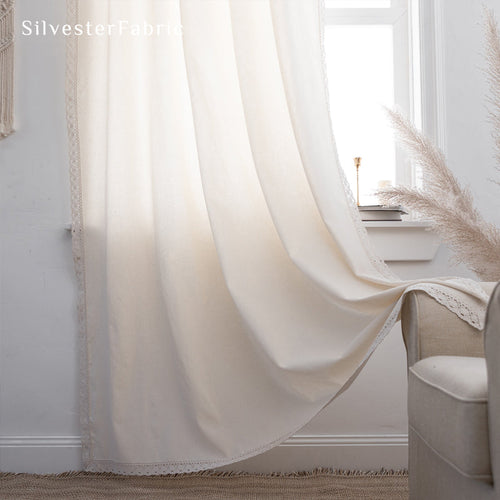
White Curtains for Timeless Bright
White curtains are the most versatile window treatment you can choose. They brighten, soften, and open up any room — matching every style, every wall color, and every season without ever looking dated.
Maximizes Natural Light
White curtains reflect and diffuse light better than any other color. They make dark rooms brighter, small rooms feel larger, and north-facing windows feel warmer — all while softening harsh glare into a gentle glow.
Goes With Everything
White is the ultimate neutral. It pairs with every wall color, every furniture style, and every accent palette. You can change your entire room's color scheme and your white curtains will still work — no need to replace them.
Choosing White Curtains for Your Home
Shades of White
Pure white feels crisp, clean, and modern — the brightest option, ideal for contemporary and minimalist spaces. Off-white and ivory feel softer and warmer, fitting farmhouse, cottage, and traditional interiors. Cream and natural white have a yellow-warm undertone that adds coziness and pairs beautifully with wood tones. Linen-white has a slightly textured, organic look that feels relaxed and lived-in.
Material & Opacity
White sheer curtains maximize daylight and add airy softness — perfect for layering or for rooms where privacy is less of a concern. White linen-blend curtains filter light beautifully while adding natural texture and more daytime privacy. White cotton curtains offer a crisp, tailored look and are the easiest to care for. White lace curtains add decorative pattern and vintage charm while still letting light through. Choose based on how much light, privacy, and texture you want.
Room by Room
Living rooms benefit from white linen or cotton panels — they brighten and soften without competing with furniture and art. Bedrooms can use white sheers layered under blackout panels for maximum flexibility. Kitchens and bathrooms suit short white cafe curtains or valances for a clean, fresh look. Dining rooms look elegant in floor-length white cotton or linen panels with decorative trim.
Styling Tips
White curtains work with every hardware finish — black metal, wood, brass, or nickel. For a layered look, pair white sheers under heavier colored or patterned curtains. Add interest with texture rather than color — tassels, embroidery, pintucks, or lace edges. White curtains also show off pattern beautifully, so if you want a statement, choose white panels with a subtle woven or embroidered design. For maintenance, choose a washable fabric like cotton or polyester-blend — white curtains need regular washing to stay bright.
FAQ
What is the difference between white, ivory, and cream curtains?
White curtains have a neutral base with no yellow or pink undertone, reflecting the full light spectrum. Ivory carries a warm yellow undertone at roughly 2–5% saturation, making it softer under daylight. Cream contains about 10–15% yellow saturation, giving it a visibly warmer appearance. Under cool LED lighting, white curtains stay crisp while ivory and cream can shift toward beige. For north-facing rooms with limited daylight, white curtains keep the space feeling brighter. For rooms with warm wood tones or brass fixtures, ivory adds cohesion without the stark contrast of pure white.
Do white curtains provide privacy, or are they see-through?
Privacy depends on fabric density, not color alone. A white cotton panel at 200–220 GSM blocks silhouettes at 3–6 feet while still transmitting diffused light. A white linen blend at 160–180 GSM shows blurred shapes when backlit at night. A white polyester sheer at 50–80 GSM is translucent in both daylight and darkness. For street-level windows, choose a white cotton or polyester blend with a tight plain weave. For upper-floor windows facing open spaces, a white linen blend provides sufficient daytime privacy. At night with interior lights on, any white curtain below 180 GSM becomes more transparent from the outside.
Which rooms work best with white curtains?
White curtains suit most rooms but perform differently by function. In kitchens, white cotton or polyester blends reflect daylight and show less water spotting than darker colors. In living rooms, white linen blends create a neutral backdrop that adapts to changing decor. In bedrooms, white curtains work best when layered with a second panel or blind because the light color amplifies early morning brightness. In bathrooms, white curtains are popular but require polyester or moisture-resistant blends to prevent water spots from showing. In dining rooms, white panels keep the space feeling open during daytime meals. Avoid unlined white linen in high-traffic entryways where hand contact can leave visible marks.
What fabric is best for white curtains?
Cotton produces a matte white with a soft drape. It absorbs light rather than reflecting it, making white cotton curtains look gentle rather than bright. Cotton works well in bedrooms and living rooms where a calm atmosphere matters. Polyester blend produces a cleaner, brighter white with a slight sheen under direct light. It resists wrinkling and holds its shape, making it practical for kitchens and high-use spaces. Linen blend produces a textured white with visible slubs and fibers. It filters light softly and adds depth, but the open weave means lower privacy. A linen-blend white curtain suits living rooms and dining rooms where texture is part of the design. For maximum brightness with minimum maintenance, a cotton-polyester blend combines the softness of cotton with the color retention of polyester.
How do I keep white curtains from turning yellow?
Yellowing comes from three sources: UV oxidation, airborne grease, and detergent residue. Hang white curtains 6–12 inches from the glass to reduce direct sun exposure. In kitchens, wash white curtains every 3–4 months instead of every 6 months to prevent grease buildup. Use a pH-neutral liquid detergent without optical brighteners, which can leave a filmy residue that attracts dust. Wash in cold water at 30°C (86°F) or below. Dry on a low-heat setting or line-dry in shade — tumble drying above 60°C (140°F) can yellow cotton fibers over time. If yellowing has already started, an oxygen-based soak for 30 minutes can lift surface discoloration on cotton and polyester, but it cannot reverse fiber-level UV damage.
Do white curtains block light, or do I need a liner?
White curtains block less visible light than the same fabric in dark colors because light pigment reflects rather than absorbs rays. A white cotton panel at 220 GSM blocks approximately 40–50% of incoming light. A white polyester blend at 200 GSM blocks 30–40%. A white linen panel at 160 GSM blocks 20–30%. For comparison, the same fabrics in charcoal or navy block 60–85%. If you need more than 50% light reduction from white curtains, add a separate liner or choose a double-layer white panel. For bedrooms, layering white curtains with a blind or shade is more effective than relying on a single white panel alone.
What wall colors pair well with white curtains?
White curtains act as a neutral bridge between wall color and natural light. Against gray walls (cool or warm), white curtains prevent the room from feeling heavy. Against beige or taupe walls, ivory or warm white curtains create a seamless tonal transition. Against sage or soft green walls, crisp white curtains add definition without competing. Against navy or charcoal accent walls, white curtains provide visual relief and keep the window area from disappearing. Against pure white walls, white curtains can blend in too much — choose a white panel with texture, embroidery, or a subtle weave pattern to add depth without introducing a new color.
Are white curtains harder to keep clean than colored curtains?
White curtains show dust and water spots more readily than medium-toned panels, but they are not harder to clean. Polyester and cotton blends release dust in a standard wash cycle. The visible advantage of white is that you notice dirt earlier, which means you clean before buildup becomes permanent. Colored curtains hide dust longer, but the accumulated particles still affect air quality. Wash white cotton or polyester curtains every 4–6 months in standard home environments, or every 2–3 months in kitchens. Vacuum white curtains monthly using an upholstery attachment to extend the interval between washes. Avoid fabric softener — it leaves a coating that traps airborne particles and dulls the white over time.
Collections
-

84-86 Inch Curtains
84-86 Inch Curtains in Floral, Lace, Linen and More Shop 84-86 inch...
-

94-96 Inch Curtains
94-96 Inch Curtains for Tall Windows Shop 94-96 inch curtains for taller...
-

Cafe Curtains
Cafe Curtains for Kitchen Windows and Half-Window Privacy Shop cafe curtains for...
-

Living Room Curtains
Curtains for Living Room in Linen, Striped and Neutral Styles Shop curtains...
-

Bedroom Curtains
Bedroom Curtains for Privacy and Light Control Shop bedroom curtains with calm...
-

Lace Curtains
Lace Curtains for Kitchen, Bedroom and Cottage Windows Find lace curtains for...
-

Farmhouse Curtains
Farmhouse Curtains for Living Room, Bedroom and Kitchen Shop farmhouse curtains in...
-

Striped Curtains
Striped Curtains for Living Room and Bedroom Shop striped curtain panels in...
-

Plaid Curtains
Plaid Curtains for Cozy Farmhouse and Cottage Rooms Shop plaid curtain panels...
-

Floral Curtains
Floral Curtains for Living Room and Bedroom Windows Shop floral curtain panels...
-

Linen Curtains
Linen Curtain Panels for Bedroom and Living Room Windows Find linen and...
-

Cotton Curtains
Cotton Curtains for Living Room, Bedroom and Kitchen Shop cotton curtain panels...


